
How Slumgullion Came To Mama D’s Kitchen of Love

Scan_Pic0007I’ve written about my mother and how she influenced my cooking. Besides being a wonderful cook she was a very well read woman. What she lacked in formal education, she more than made up for in general knowledge and an interesting and expansive vocabulary. She read the newspaper front to back everyday and always did National Observer Crossword Puzzles in ink. That’s an aspect of my personality that I can thank her for; I love to read and my facts of useless information are legendary among family and friends.

When my sons were growing up, I repurposed a lot of leftovers. I would combine meats and vegetables to get every bit of mileage out of the food I cooked. I’d add rice, pasta, or potatoes to stretch things a little farther. Scan_Pic0006When my mother saw me doing this she would always call it Slumgullion. An odd word that I honestly didn’t know the meaning of at the time, but it sounded sort of exotic and it became the name for any Leftovers of Love. I thought I should find out what the name actually meant. I looked it up a few years ago. According to the dictionary it’s a watery stew; mud and mine sluices; or whale blubber. Not very exotic after all. The name was already established so I set about to elevate it beyond its modest(?) origins. I even went so far is to make it with non-leftovers.

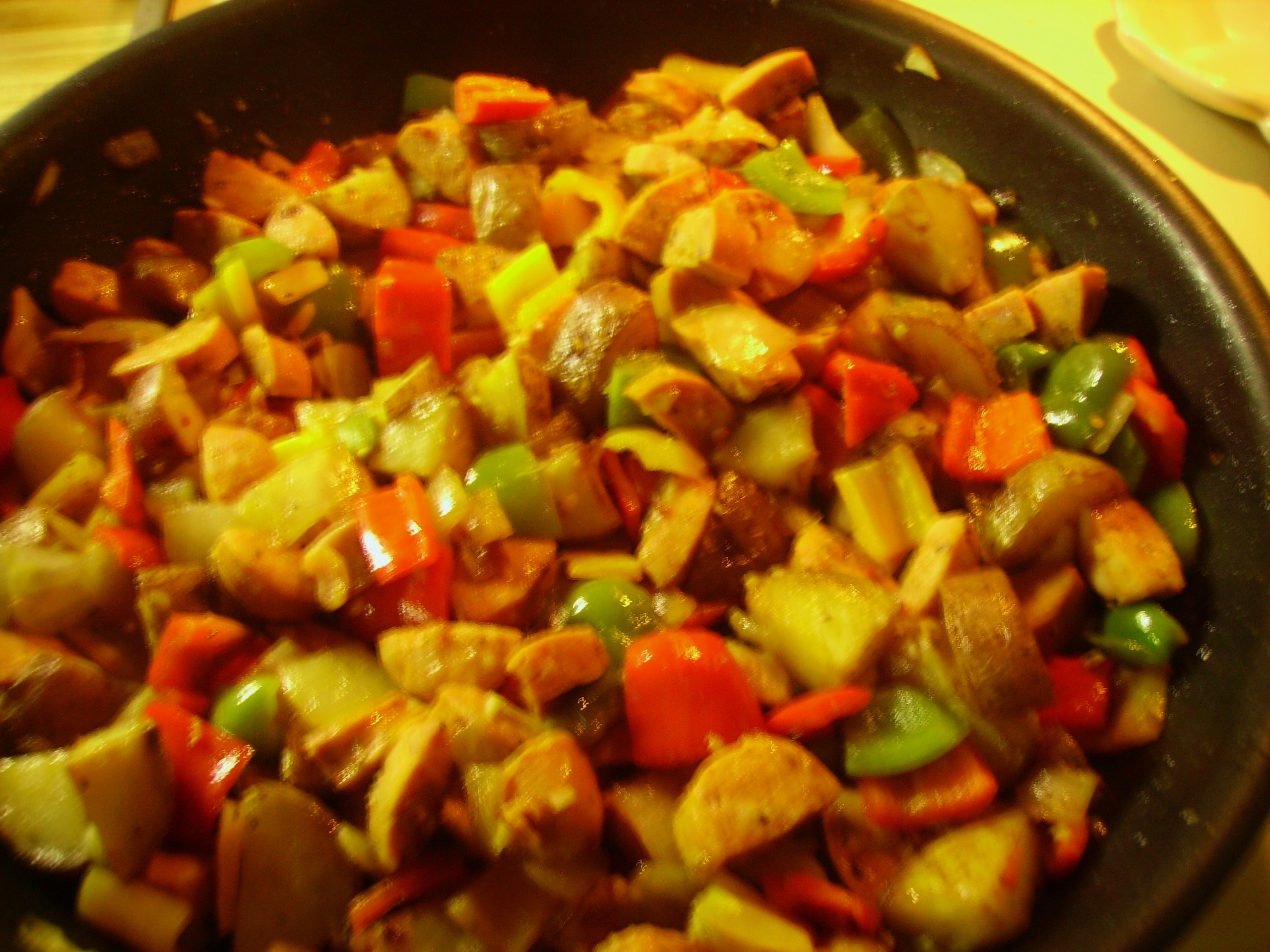
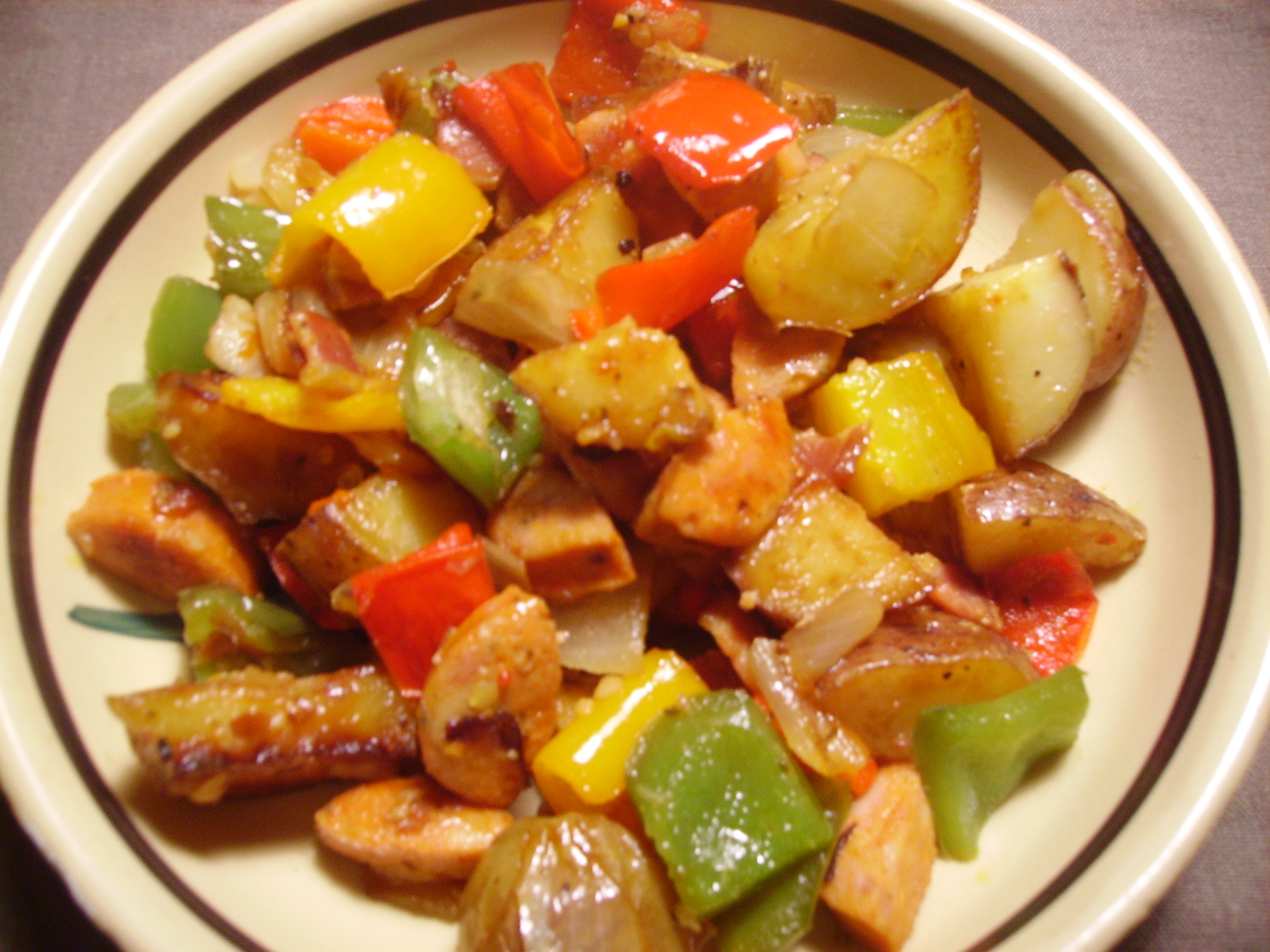
Surprisingly many people have recipes for Slumgullion ranging from a tomato based pasta dish, to a thin stew and even a tamales pie. What has become Slumgullion in our family however, is a skillet meal. DIGITAL CAMERAThere’s always some kind of beef, pork or chicken smoked sausage with Kielbasa and Andouille being my favorites. Peppers of any variety along with onions and garlic create the vegetable component and there must be potatoes. Yukon Gold or Red are my potatoes of choice. Spices and herbs vary and are often kept to a minimum.

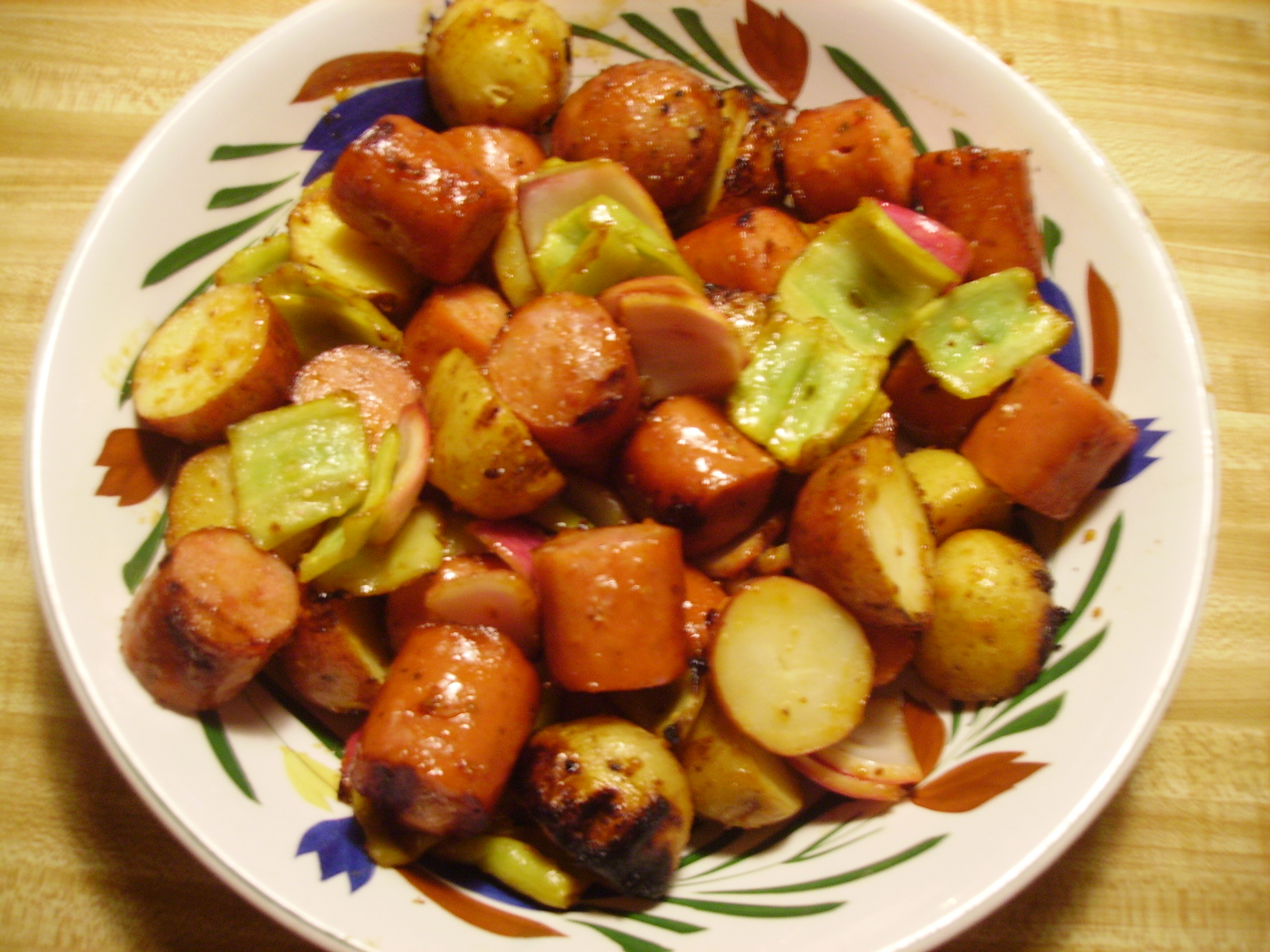
DIGITAL CAMERA I even took it to the grill this summer and SlumgullionDIGITAL CAMERA on a Stick was born. The smokey taste that the grill imparted was a nice compliment to my standard ingredients. I’d always thought of Slumgullion as  a winter comfort food, but this grill interpretation was terrific and made this a year round meal. Production Note: I par-cooked the potatoes to even the cooking field. The peppers were Cubanelle. I also marinated everything in a balsamic vinaigrette and used it as a baste as well.

As with many of my recipes, the following is merely a suggestion. I never stick to it completely and I hope you’ll use it as a jumping off point to create your own Slumgullion Love. I’ve experimented with different techniques and cooking the ingredients in stages starting with the potatoes works best for flavor and texture. It’s one of those dishes that gets better after a day or so and you could easily double the recipe and freeze the leftovers. With cooler weather advancing every day, it’s a comforting meal that only needs some warm crusty bread and maybe a salad.

I think my Mom would approve.

Slumgullion
Print Recipe
Slumgullion is a skillet dish that has many interpretations...This is Mama D's version.
Servings Prep Time
6 15 minutes
Cook Time
30 minutes
Servings Prep Time
6 15 minutes
Cook Time
30 minutes
Slumgullion
Print Recipe
Slumgullion is a skillet dish that has many interpretations...This is Mama D's version.
Servings Prep Time
6 15 minutes
Cook Time
30 minutes
Servings Prep Time
6 15 minutes
Cook Time
30 minutes
Ingredients
Servings:
Instructions
  1. Heat Olive Oil in a large skillet (with a lid). Add the Potatoes and toss to coat with the oil. Arrange in a single layer, cover and cook at medium heat for 3-5 minutes.Turn the potatoes and rearrange in a single layer. Cover the pan and cook fo another 3-5 minutes. The potatoes should be starting to feel tender. You no longer need the lid.
  2. Add the onions to the potatoes in the pan and cook for another 5 minutes until the onions are beginning to soften and brown. Add all of the peppers and cook, stirring occasionally 5 minutes or so until the peppers begin to soften.
  3. Raise the heat to medium high and add the sausage and garlic. Cook and stir until the sausage is beginning to brown. Keep the garlic moving do it doesn't burn.This should take 6 minutes or so.
  4. Add the Chicken Stock to the pan. Stir to loosen any brown bits and to coat the Slumgullion. Heat another 2 - 3 minutes. Add Salt and Pepper to taste. Remove from heat and serve.
Share this Recipe
Powered byWP Ultimate Recipe


What Is It About Basil? (part 2)

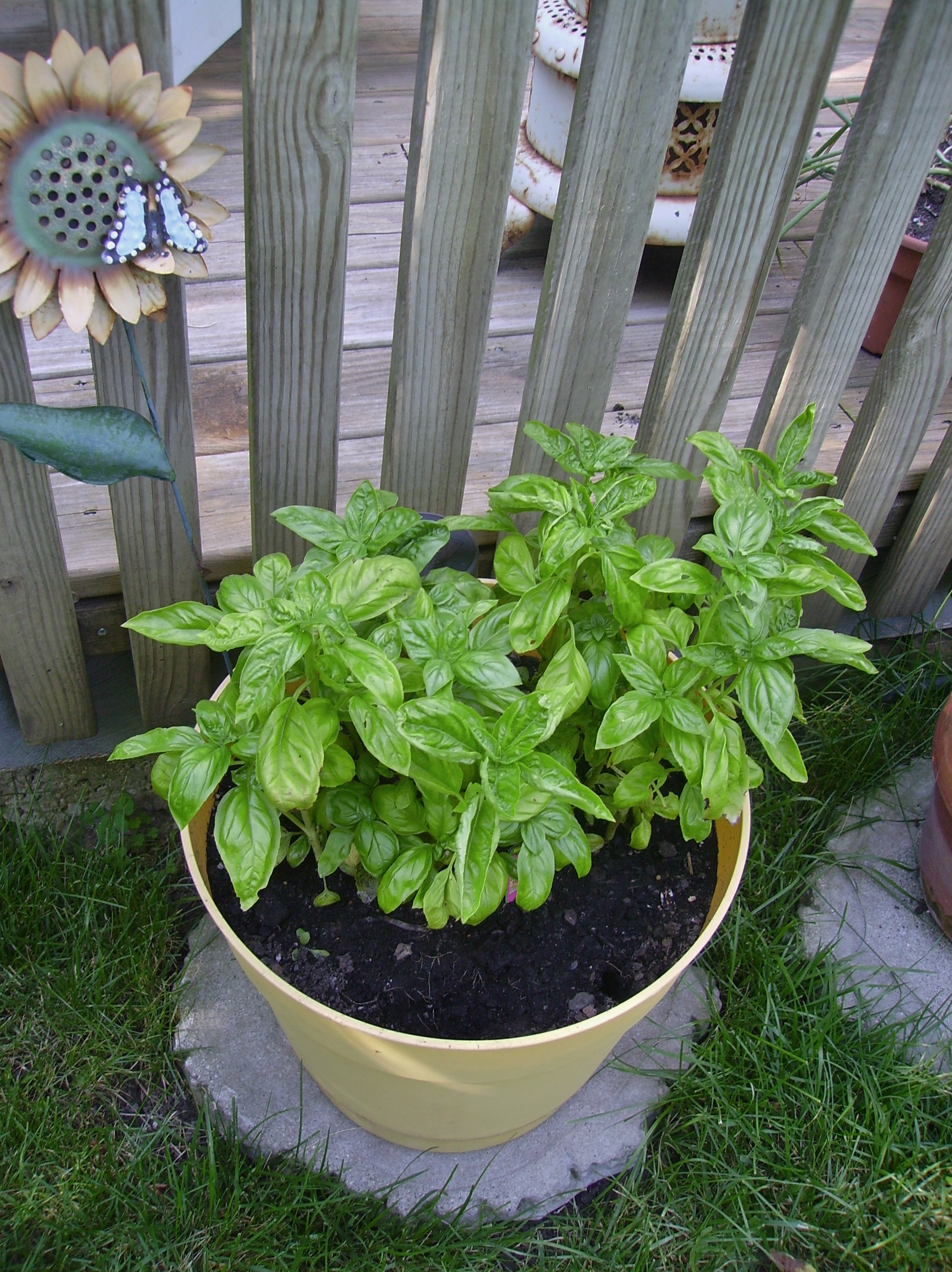
DIGITAL CAMERAI’ve talked about basil at length before, but I love this herb enough to do it one more time. As the summer moves on, the basil gets bigger and more fragrant. The flowers haven’t quite started yet, but the leaves are getting more fragrant and just stepping in the yard reveals a hint of the smell (if your mind is feeling right). We are still using it in a variety of recipes, but the time for Pesto making is drawing near.

I will be the first to admit that Pesto is an acquired taste. For me, I love the smell, texture, and taste of pesto. My digestive system, however, has issues….it gives me heartburn. I was faced with the quandary of how to enjoy Pesto, but not have to pay the price afterwards. I experimented with a few ideas and finally came up with what, for me, is the perfect solution: Roasted Garlic Pesto.

My interpretation of the classic Genovese recipe uses the usual gallery of ingredients, I just treat them a little differently.

First there’s the garlic. Most recipes call for several cloves of raw garlic which will send my digestive juices to a very ugly place. I opt to take a whole head (yes, a whole head) whack off the top, drizzle it  with olive oil, wrap it in foil, and stick it in the oven (350 degrees)until it gives off a sweet garlic aroma which can take 30 – 40 minutes.

While that’s happening, I like to toast the pine nuts. This is usually about 3 ounces of raw nuts. I toast them on top of the stove until they are lightly golden and smell, well, like pine trees( yes, they  are aptly named).

Basil and parsley in about a 4 to 1 ratio are combined in the processor with the garlic and pine nuts. They are processed until they are of a medium texture.  I drizzle in the olive oil until a  chunky paste forms.

No Pesto is complete without cheese. I use Pecorino Romano. This is a pungent sheep’s milk cheese, that has a slightly creamier texture than Parmesan. It is the cheese that I grew up with.  We would buy it by the half wheel and grind it in our Mouli Grater.te4867a If you haven’t tried this cheese, I would encourage you to give it a shot.  Another plus, it’s about half the price Parmagiano Reggiano.

So, I use about 3/4 of a cup of the grated cheese. This is added to the paste in the processor. Everything is blended until the paste is slightly chunky  (more olive oil can be added at this point if it seems like it’s dry) with a creamy look.

It is now ready to use in your favoite recipe or it can also be frozen in 1/4 to 1/3 cup portions for future uses that will keep for up to 6 months in freezer tolerant packaging.

Pasta and Pesto go together like Laurel and Hardy. It is wonderful on Fetuccinni or Liguine (mixed with a little heavy cream or even some red sauce). It can top fish or chicken, even a grilled steak would be happy to have it as its crowning glory.

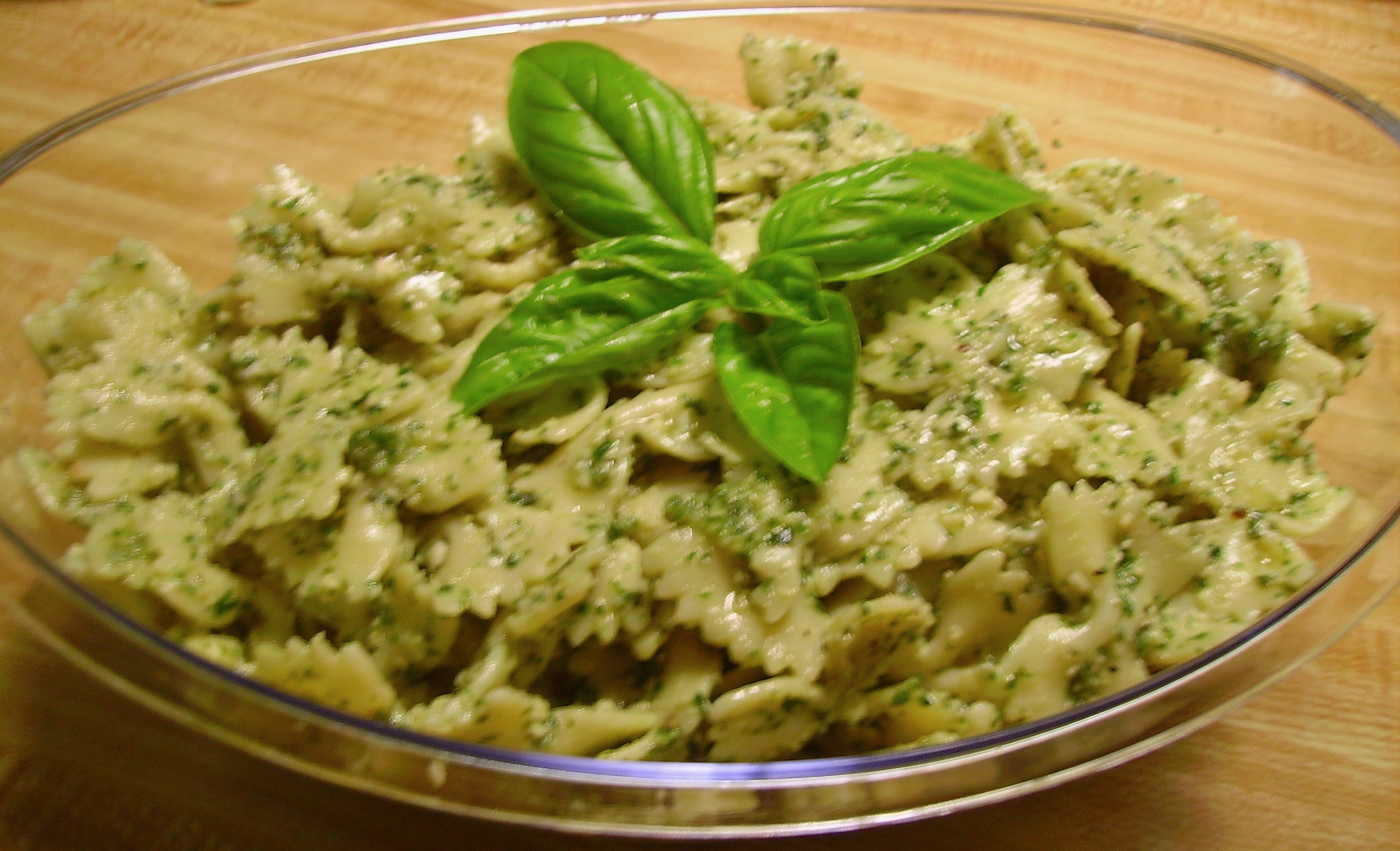
One of my favorite ways to use it is in a Pesto Pasta Salad.Pesto Pasta Salad  I use Farfalle or Cavatapi pasta because it has lots of nooks and cranies to hold the Pesto. I toss the cooked pasta lightly with olive oil, then add the pesto a little at a time until the pasta is nicely coated. This can be served at room temperature or it can be chilled. The chilling lets the flavors get to know each other, but may require a little milk or olive oil to moisten it before serving.

So, Pesto –  the recipe isn’t an exact one, but that allows for indivdual interpretation. I hope you will find your own perfect Pesto recipe. Let me know what it is.

Jambalaya – “Gonna Have Big Fun” In the Midwest

I love New Orleans. In years past I had the privilege of visiting several times. I was always impressed by the food, and the drink, for that matter. My visits, which were to catch up with my best friend who lived there for 7 years, usually consisted of going to the local (read little known hole in the wall) blues clubs and restaurants for awesome red beans and rice, muffaletas and fresh oysters( the best of these were where  the”shuckers” were right below the stage in the same kind of focused groove the musicians above them were). In my visits there I never had jambalaya. I never even thought about until we went to   Heaven on 7 in Chicago. I didn’t eat it there either, but it put Cajun and Creole food on my radar. It is my opinion that this cuisine is very labor intensive, but the results are more than worth the effort.

I recently discovered a fantastic recipe for jambalaya in a magazine. It was wonderful even though it was very labor intensive (cooking a whole chicken to create the stock and chicken for the dish – btw totally worth it) and I wasn’t able to get every ingerdient…who knew that Tasso is not a Midwestern commodity. For the record, I created what I think was an acceptable substitute: A thick slab of the smokiest ham the deli carried, rubbed with creole seasoning, white and black pepper and cayenne. But I digress…

Having made the traditional Jambalya I had the thought that the basic ingredients would make a good soup. That’s where this recipe came from. I was in possession of some fabulous andouille sausage from the Wurst Kitchen in Aurora Illinois. I also had chicken thigh trimmings in the freezer. Another digression: When I’m prepping boneless skinless chicken thighs for the grill, I trim the  ends that are barely connected as well as doing some trimming to create a more even thickness on each piece. I save these in the freezer to use in things, well, like soup….

Jambalaya Soup

1 T. vegetable oil

1 ½ pound andouille Sausage, chopped                                  Creole Seasoning, cayenne, white

1 pound chicken thighs cut in bite size pieces                       &  black pepper to taste

2 cups chopped onion                                                                       1 quart chicken stock

1 cup green bell pepper, chopped                                              1 cup  vegetable stock

1 C. celery, chopped                                                                             ½ C.  rice

5 – 6 garlic cloves, chopped                                                       Crushed Ritz Crackers (yup)

  1. Heat oil in large soup pot. Add the chopped andouille and cook until lightly browned and some fat has been rendered. Remove from pan.
  2. Add chicken to pot and cook, stirring occasionally until lightly browned. Remove from the pan.
  3. Add the onion, green pepper, and celery (a.k.a. The Trinity) to the pan and cook over medium heat until softened and beginning to brown. Add the garlic and cook for 3 – 4 minutes longer.
  4. Add approximately ½ cup of stock to the pan to de-glaze and loosen everything
  5. Add the rice and saute for 2 – 3 minutes. Add the rest of the stock and bring to a boil. Reduce heat to simmer, cover and cook for 15 – 20 minutes.
  6. Ladle into bowls and top with crushed Ritz Crackers.

This recipe makes 4 – 6 servings

NOTE: Okay, I know there is no ham in this recipe, and ham is key in any jambalaya recipe (I think “jam” means ham) but you can definitely add it to your version and who knows, I may add it to mine the next time I make it.